
Acclimating Wood Floors – The Step Homeowners Often Overlook
Most homeowners invest a lot of time choosing the right wood species, finish, and color for their new hardwood floors. But what many don’t realize is that the success of the installation begins long before laying the first plank.
Hardwood is a natural product. Even after milling, staining, and finishing, wood continues to breathe. It responds to moisture in the air, expanding when humidity rises and shrinking when humidity falls.
“Wood always aims for moisture balance with its environment. If the flooring goes into a home before it adjusts, the wood will find that balance after it’s installed. That’s when homeowners start noticing movement.”
– Travis Bjorkman, Principal Scientist for Wood, AHF.
Acclimation gives the floor time to settle into the home’s living conditions so it can perform as designed.
Key Takeaways
- Wood flooring needs time to adjust to your home’s temperature and humidity before installation.
- Skipping acclimation can lead to gaps, cupping, buckling, or warped boards months after the floor is installed.
- Engineered hardwood acclimates faster than solid wood, but still requires stabilization as a best practice. Moisture readings, not time alone, determine when acclimation is complete.
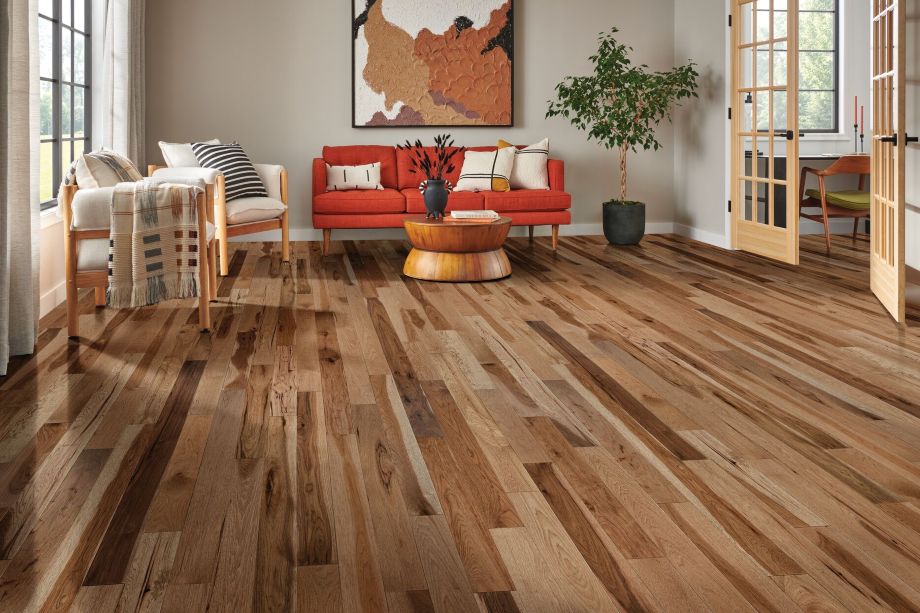
How Wood Reacts to Your Home’s Environment
Every home has its own climate: HVAC patterns, drafty areas, seasonal changes, humidity sources, and even how sunlight warms certain rooms. Wood reacts to all of it.
When indoor air is humid:
- Planks absorb moisture
- Wood swells, and plank edges may rise, causing cupping
When indoor air is dry:
- Planks release moisture
- Wood contracts
- Gaps form between boards
This behavior is entirely normal. The goal of acclimation is to ensure it occurs before the flooring is fixed in place.
What Happens When You Skip Acclimation?
Some problems appear immediately. Others surface slowly, often months later, when the seasons shift. Common issues include:
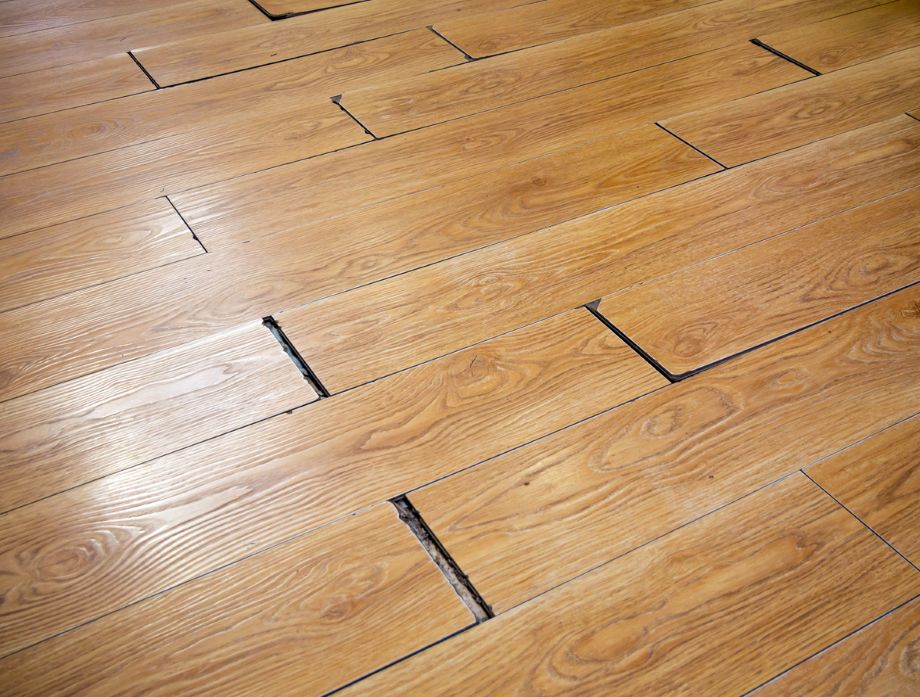
Gapping Between Boards
If the flooring dries after installation, the planks shrink, and spaces open between rows.
Cupping or Crowning
High moisture causes planks to swell unevenly, creating curved surfaces.
Buckling or Lifting
If boards expand with nowhere to go, planks lift from the subfloor.
Permanent Warping
Prolonged moisture imbalance can distort boards beyond repair.
Costly Replacement
Once wood distorts, it can’t be “coaxed” back into shape. Repairs often require plank replacement or refinishing.
“Many failures traced back to ‘bad wood’ are actually moisture imbalances. The wood was never given time to stabilize, so it went through that adjustment phase after it was installed.”
– Travis Bjorkman, Principal Scientist for Wood, AHF.
Does Engineered Hardwood Need to Acclimate?
Although engineered hardwood has a layered construction that offers more stability than solid planks, it still contains real hardwood on its surface. And that top layer reacts to moisture just like solid lumber.
“Engineered wood doesn’t move as dramatically as solid planks, but it still reacts. Acclimation protects the veneer and helps the core adjust evenly.”
– Travis Bjorkman, Principal Scientist for Wood, AHF.
Engineered products may acclimate faster than solid hardwoods, but they are not immune to environmental changes. Best practice is to allow time for acclimation.
How Long Should You Acclimate Wood Flooring?
There is no single answer, because every home and every product behaves differently.
However, here are general guidelines under normal indoor living conditions:
| Flooring Type | Typical Acclimation Time |
| Solid hardwood | 3–10 days |
| Engineered hardwood | 48–72 hours |
| Exotic species | Up to 14 days |
| Laminate | 48–72 hours |
| Luxury vinyl | 24–72 hours |
Many homeowners hear “let the flooring sit for a few days” and assume acclimation is just a waiting game. Not so.
Time doesn’t acclimate wood — moisture balance does.
Measure the Moisture Content of Your Flooring and Subfloor
The only accurate way to determine when acclimation is complete is to measure moisture content in both the flooring and the subfloor. Installers use a moisture meter and a hygrometer to check the readings.
When the wood and subfloor fall within the recommended difference (typically 2–3 percent depending on plank width) and those readings remain stable, the flooring has reached proper moisture equilibrium with your home.
That’s the moment installation can safely begin because the wood and the house are finally in sync.
The Conditions Your Home Must Meet Before Acclimation Begins
Acclimation only works if your home is already stable. Flooring should not be delivered until:
- HVAC is running normally
- Temperature is between 60°F and–80°F
- Indoor humidity is between 30 and 50 percent
- All wet construction work (paint, drywall, concrete) has dried
If your home isn’t at your everyday living conditions, the flooring cannot reach equilibrium.
Step-by-Step Guide to Proper Acclimation
So what’s the actual process look like? Here’s what homeowners can expect when installers follow professional guidelines.
1. Bring the Flooring Inside the Home Right Away
Avoid storing it in garages, porches, or basements where temperatures and humidity fluctuate. You want the flooring to acclimate to where you will install it.
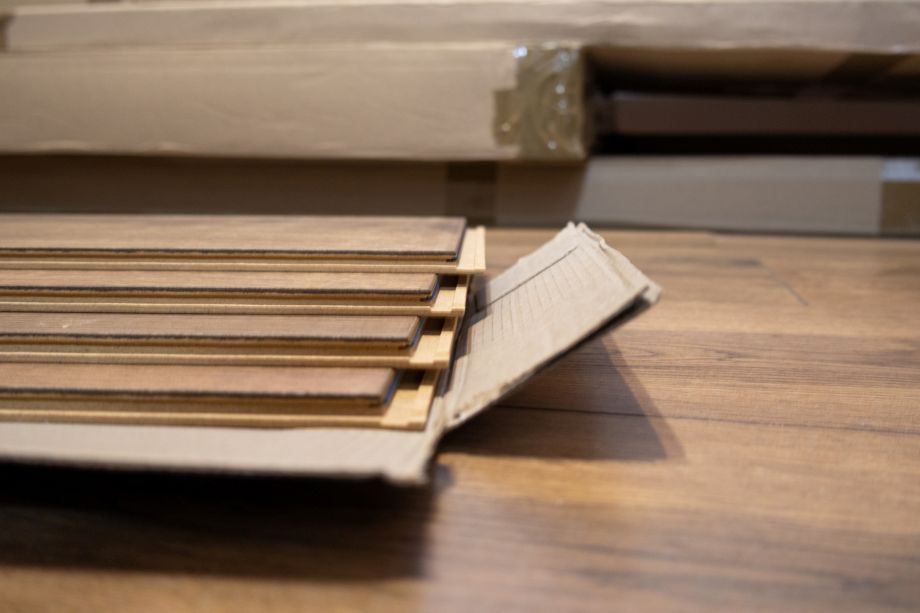
2. Open the Boxes
Wood cannot acclimate inside sealed packaging. Planks need airflow to adjust.
3. Allow Air Circulation Around Planks
Installers may cross-stack the boards or spread them out so air reaches all sides.
4. Take Moisture Meter Readings
The installer will check:
- The subfloor moisture
- The flooring moisture
- The difference between the two
Typical residential targets are 6–9 percent moisture content, with the flooring and subfloor no more than 2–3 percent apart, depending on plank width.
5. Once Readings Stabilize, Installation Can Begin
Stabilization protects the floor from unnecessary stress post-installation.
“Acclimation ends when the numbers stop moving. If readings are stable and fall within guidelines, the floor is ready.”
– Travis Bjorkman, Principal Scientist for Wood, AHF.
How Seasons Affect Acclimation
Seasonal changes inside your home play a significant role in how wood flooring behaves. Even after installation, wood continues to respond to temperature and humidity shifts throughout the year. Understanding what happens in your home during different seasons can help you make sense of the natural movement you may see in your floors.
Summer: Humidity Expands Your Floors
In the summer months, the air inside your home naturally holds more moisture. Wood absorbs that moisture quickly, which can cause planks to swell or edges to lift slightly. That’s especially true in homes without air conditioning because humidity levels tend to swing more widely throughout the day.
Winter: Dry Indoor Air Shrinks Your Floors
When winter arrives, heating systems dry out the air. As indoor humidity drops, wood begins to release moisture. This action can cause boards to shrink, creating small gaps or cracks that weren’t noticeable earlier in the year. Even well-installed floors will show some seasonal movement, but proper acclimation helps keep it within normal limits.
Here’s the critical point. Seasonal change doesn’t harm wood flooring when properly acclimated. It simply breathes naturally within acceptable limits.
Why Proper Acclimation Protects Your Investment
Hardwood flooring lasts for decades, but its longevity depends on how well you install it, and acclimation is a critical part of that process.
Proper acclimation enhances:
- Stability
- Appearance
- Performance during seasonal transitions
- Long-term durability
- Warranty protection
Regional Moisture Considerations: Why Your Location Matters
Seasonal changes aren’t the only factor influencing how wood flooring behaves.
Where you live also plays a significant role in the natural moisture levels inside your home.
Different regions across North America experience very different humidity patterns, which means wood floors in Arizona, Pennsylvania, and Florida will each face their own unique environmental challenges.
The map below shows typical moisture content ranges for interior wood products across North America. These numbers aren’t exact for every home, but they illustrate how dramatically average moisture levels can shift from one region to another.
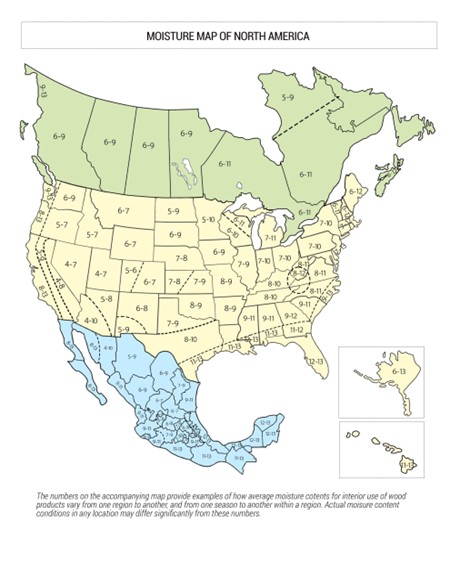
Source: Wagner Meters
How Regional Moisture Levels Impact Flooring
Beyond seasonal changes, the region you live in also affects how wood flooring behaves. Different parts of North America have very different average moisture levels, and those conditions can influence how much your floor expands or contracts over time.
- Dry regions (4–7% ranges):
Homes in the Mountain West and Southwest often have arid indoor air for much of the year. Wood floors in these areas are more prone to shrinkage, gaps, and surface checking if not acclimated correctly. - Moderate regions (6–9% ranges):
Much of the central and northern United States falls into this zone. Homes experience steady seasonal swings, so proper acclimation helps limit visible movement across the year. - Humid regions (9–13% ranges):
Coastal states, the Southeast, and parts of Mexico experience consistently high humidity. Floors here need careful monitoring to avoid cupping, crowning, and long-term moisture imbalance.
“Every region has its own moisture personality. A floor installed in Colorado will behave differently from one installed in Georgia, even if both were acclimated properly. That’s why understanding your local environment is so important.”
– Travis Bjorkman, Principal Scientist for Wood, AHF.
Acclimation Sets Your Installation Up for Success
Seasonal changes, regional humidity patterns, and the day-to-day conditions inside your home all influence how wood flooring performs.
When you allow flooring to acclimate properly, you’re giving the wood the chance to settle into your home’s unique environment before installation begins. That simple step lays the groundwork for a solid install that leads to long-term stability and fewer surprises down the road.
Similarly, choosing a high-quality product contributes to the success of your installation. Robbins® hardwood floors handle real-world living conditions and natural wood movement with confidence.
Pair proper acclimation with a well-built floor, and you create the best possible foundation for beautiful, durable results that last for years.
Locate a Robbins retailer near you or visit our website to see our collections.
FAQs About Wood Flooring Acclimation
Do all wood floors need to acclimate?
Yes. Some require less time than others, but any product containing real wood must adjust to the home’s environment before installation.
Does engineered hardwood acclimate faster than solid hardwood?
Typically, yes. Nevertheless, as a best practice, it requires time to reach moisture balance.
Can flooring acclimate while still boxed?
No. Packaging restricts airflow and traps moisture.
What if my home’s humidity is outside the recommended range?
The HVAC system should bring the home into normal living conditions before acclimation begins.
Is 24 hours enough for the flooring to acclimate?
Usually not. While flooring may reach room temperature quickly, moisture equalization takes longer.
Won’t seasonal movement happen anyway?
Yes — but proper acclimation ensures normal movement stays within safe limits.