
Engineered Hardwood Flooring: The Ultimate Guide for Homeowners
Published November 16, 2023 • Updated September 2025 | By Robbins® Flooring Experts
Choosing new flooring is one of the biggest style and performance decisions you’ll make for your home. With so many flooring options out there—solid hardwood, vinyl, laminate—it can feel overwhelming.
But for the warmth and character of real wood floors with a performance edge, engineered hardwood flooring may be the best fit.
Engineered wood flooring has grown rapidly in popularity and now outsells solid hardwood in many markets. In fact, engineered hardwood accounts for more than half of hardwood flooring sales in North America (Grand View Research).
Here’s what you need to know. 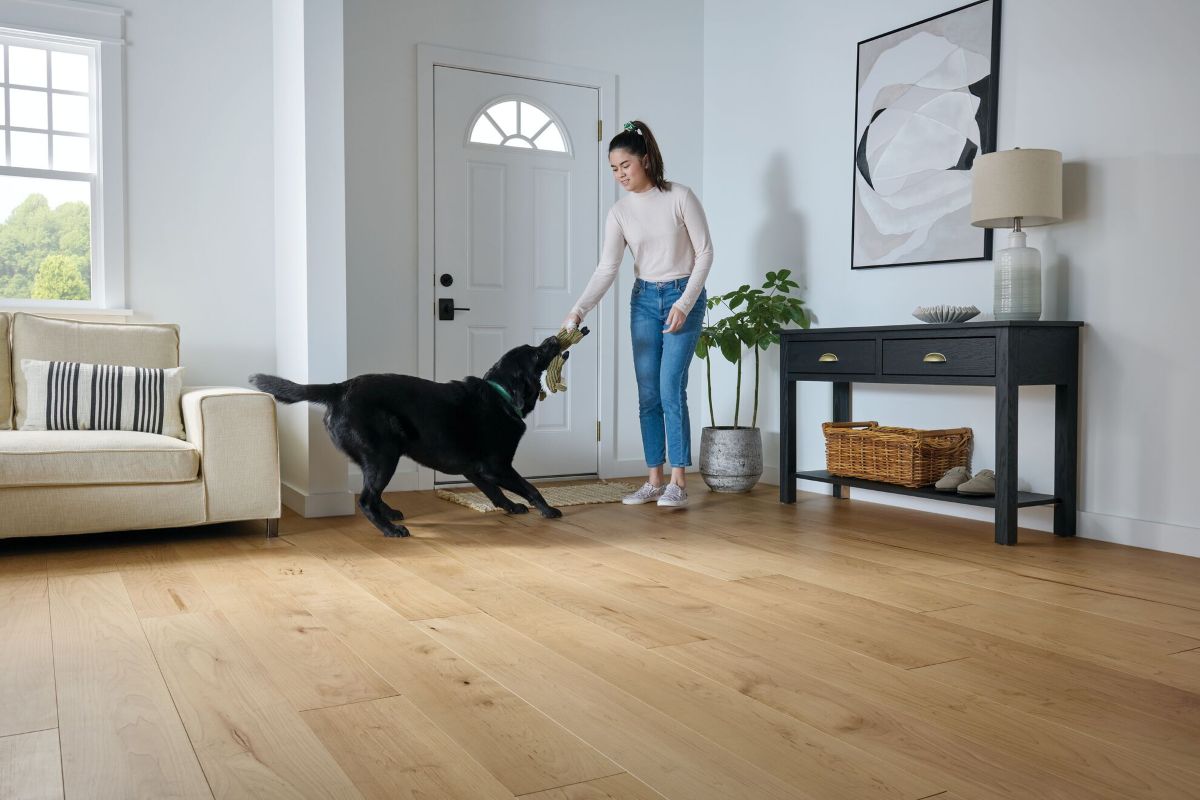 Engineered hardwood’s construction makes it more water-resistant and better able to handle humidity and temperature fluctuations. It’s also a durable flooring solution for active homes.
Engineered hardwood’s construction makes it more water-resistant and better able to handle humidity and temperature fluctuations. It’s also a durable flooring solution for active homes.
Key Takeaways
If you’re starting to explore engineered hardwood flooring, here are the essentials to know up front. These quick points highlight why it has become one of today’s most popular wood flooring options, and how it compares to solid hardwood flooring and other alternatives.- Engineered hardwood is real wood flooring. It features a genuine hardwood top veneer layer over a plywood core or HDF for stability.
- It provides more dimensional stability than solid hardwood flooring. That translates to less expansion and contraction of planks. So, it can go in more places (including below grade) and works with wider plank widths.
- Standard engineered hardwood is water-resistant, not waterproof. It handles everyday moisture with proper care. For actual waterproof performance, look to specialized products.
- Refinishing depends on the thickness of the veneer layer. You can sand and refinish many engineered wood flooring products at least once, sometimes more.
- Engineered hardwood looks and feels like real wood. It performs better than laminate and vinyl flooring.
Engineered vs. Solid Hardwood: What’s the Difference?
The key differences center on construction, placement, and long-term maintenance. Gain insight into whether solid or engineered hardwood may be better for you.| Feature | Engineered Hardwood | Solid Hardwood Flooring |
| Composition | Real wood veneer over plywood core/HDF | One piece of solid wood throughout |
| Stability | High (cross-laminated core resists movement) | Moderate (moves more with humidity) |
| Water Resistance | Better day-to-day resistance (still not waterproof) | Lower; more sensitive to moisture |
| Where It Installs | Suitable for all levels, including basements, and generally compatible with radiant heat. | Typically above grade; basements not recommended. |
| Plank Width | Wider options common | Often narrower unless conditions are ideal |
| Refinishing | Depends on the top layer (2–4mm = 0–2 sandings) | Multiple sandings over decades |
| Installation Method | Nail, glue, or float | Nail/staple (glue in some cases) |
| Look/Feel | Real wood; wide range of species/finishes | Real wood; classic, traditional performance |
| Cost | Often, it is more budget-friendly overall | Typically higher material + install cost |
Why Engineered Hardwood Is the Real Deal
Numerous flooring options exist when you’re upgrading a room or building new. Among them, engineered hardwood flooring is a popular, versatile pick—and today it often outsells solid wood floors. Start by understanding that engineered hardwood is genuine hardwood. So, you’re not installing a synthetic flooring material like vinyl or laminate. The difference is in the manufacturing process.How Engineered Hardwood Is Made
Engineered hardwood is genuine hardwood. However, manufacturers build it differently for added performance.- Top layer: A 100% real hardwood veneer (think oak flooring, hickory, maple). Typical wear layer thicknesses are 2mm, 3mm, or 4mm.
- Core: Multiple cross-laminated plywood core layers (or HDF) that add stability.
- Back layer: Balancing layer for plank flatness.
Engineered Hardwood’s Core Advantage
Wood naturally expands and contracts with humidity and temperature. So, solid wood flooring planks are subject to expansion and contraction. The more that happens, the greater your risk of cupped or warped floors. Engineered hardwoods with crisscrossed layers minimize expansion and contraction. Consequently, you’ll see fewer gaps and cupping—especially in climates with swings or homes with radiant heat.“The key advantage of engineered hardwood is its dimensional stability. That layered construction lets homeowners enjoy wider planks and more installation flexibility than solid wood allows.” – Travis Bjorkman, Principal Scientist, Wood, AHF.Practically, this means the flooring offers several inherent advantages:
- Wider plank width options without the drama.
- More flexibility in installation methods (nail, glue, or float).
- All-level installations—including basements (below grade).
- Better day-to-day wear and tear tolerance from family, pets, and life.
Water Resistance vs. Waterproof
This area often trips people up because they think it means the same thing. However, standard engineered hardwood is water-resistant, not waterproof. It stands up better to everyday moisture (spills, damp mopping) than solid hardwood. However, you should still wipe spills promptly and keep humidity in range. With prolonged exposure to moisture, it will begin to seep into the wood.Waterproof Engineered Hardwood is Now a Reality
Not surprisingly, manufacturers have addressed the issue with advances in waterproofing. For example, Robbins® offers HydroGuard® engineered hardwood, a specialized construction for rooms like bathrooms where splashes happen. Its innovative system keeps your floors safe from top-down moisture. You get 100% waterproof engineered wood flooring. The improvements don’t end there, though. The company has also introduced densified wood technology with its latest collection, Timber Legends™. It offers waterproof performance while doubling the hardness of wood, making it more scratch- and dent-resistant.Veneer Layer, Life Expectancy & Refinishing
Yes, you can refinish engineered hardwood, though less frequently than solid hardwood. Many hardwood floors are 3/4″ thick, allowing you to sand the floors numerous times. That lets you refinish solid wood floors at least four times. With engineered hardwoods, however, the veneer thickness governs how often you can refinish them. General guidance:- ~2mm wear layer: Often screen & recoat only.
- ~3mm wear layer: Typically, one sanding is possible.
- ~4mm wear layer: Often 1–2 sandings possible.
“The ply layer thickness is the detail homeowners often overlook. It’s what determines whether your floor can be sanded once or multiple times over its life.” – Travis Bjorkman, Principal Scientist, Wood, AHF.With proper care, engineered hardwood can last 25–30 years—and some higher-end collections last even longer. Robbins backs many products with 25-year to lifetime warranties. However, its waterproof engineered flooring includes a limited lifetime warranty.
Installing Engineered Hardwood
Engineered hardwood’s installation methods and stability make it more DIY-friendly for the average homeowner. Solid hardwood, by contrast, often requires pro tools, more acclimation, and more technical expertise. Engineered hardwood install options vary by product and subfloor:- Nail/Staple: Classic method over wood subfloors.
- Glue-Down: Common over concrete.
- Floating: Faster installs and easier board replacement later.
Care & Maintenance of Engineered Wood Floors
Engineered hardwood is reasonably simple to care for. A few habits go a long way:- Wipe spills promptly (remember: water-resistant doesn’t mean waterproof).
- Use hardwood-approved cleaners.
- Maintain indoor humidity in the recommended range.
- Add felt pads under furniture; use rugs at entries to trap grit.
- Keep pet nails trimmed to reduce wear and tear.
Choosing the Right Engineered Hardwood
When selecting engineered hardwood, keep these essentials in mind:- Wood species: Engineered hardwood is available in numerous species. Oak flooring is timeless, hickory is rustic and durable, and maple is smooth and modern.
- Plank width: Wider planks create a modern, open look, enabled by engineered stability.
- Veneer layer: Thicker layers give you more opportunities for sanding and refinishing.
- Installation method: Nail, glue, or float, depending on your subfloor and room.
- Finish & color: From matte wire-brushed textures to sleek naturals, choose the look that matches your style.
“With Robbins, homeowners don’t have to choose between beauty and performance. Our engineered hardwood collections deliver both, with options for every style and every space.” – Devon McGrorty, Marketing Manager, AHF.You can choose from more than 125 styles and colors of engineered hardwood. Some options are water-resistant. Others are entirely waterproof. Plus, you can choose from a range of species, plank widths, and finishes. Use our dealer locator to find your nearest retailer and plan your project with confidence.