
Herringbone Pattern Wood Floors: A Timeless Design for Today
April 3, 2026 | By Robbins®
Patterned hardwood floors are having a moment. And few designs feel as timeless as the herringbone pattern.
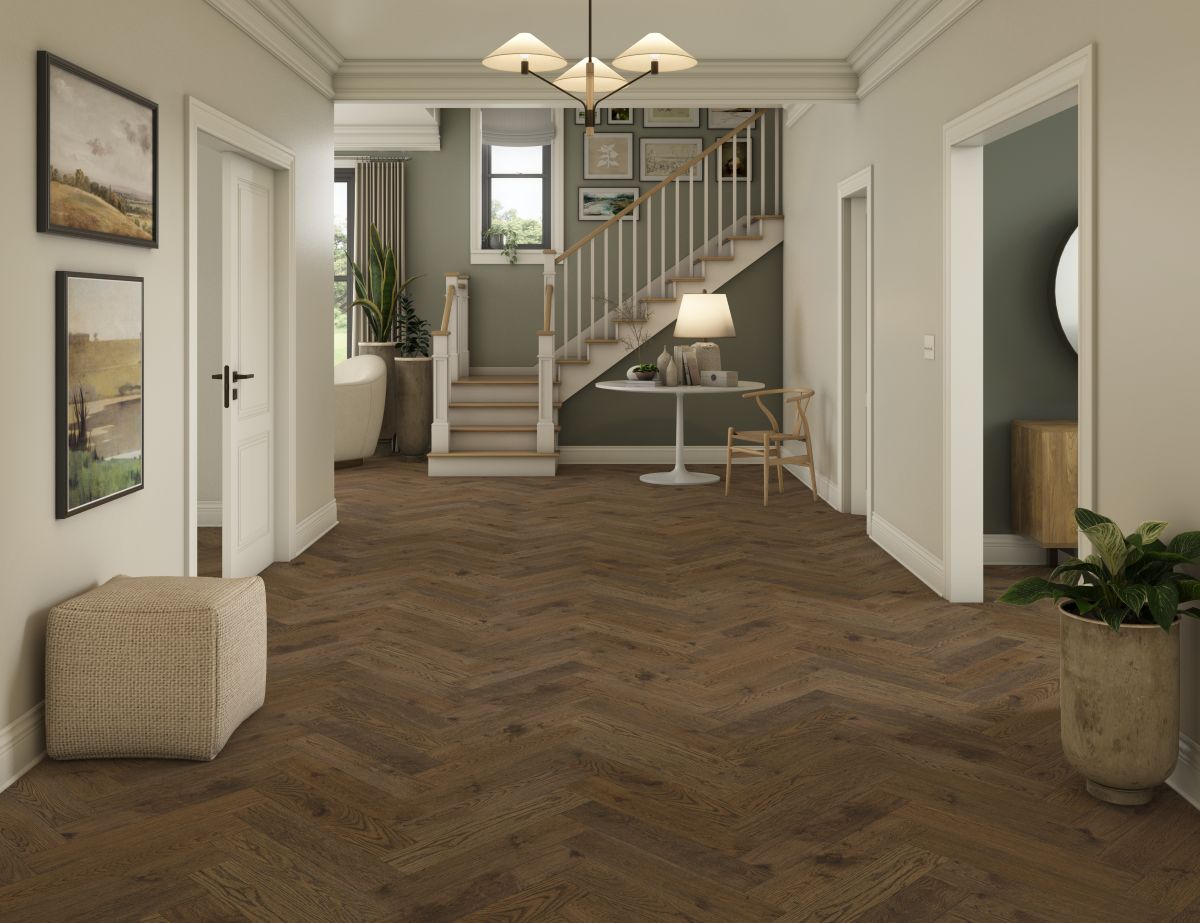
Herringbone flooring is a hardwood floor pattern where rectangular planks are installed at 90-degree angles to create a repeating zigzag layout.
You’ve likely seen it in luxury hotels, historic homes, and high-end design magazines. Today, it’s appearing in modern homes across the country.
Herringbone-pattern wood floors bring movement, texture, and architectural detail to a space. The design feels both classic and fresh.
Modern engineered hardwood products have helped fuel the trend. They allow homeowners to enjoy the elegance of herringbone flooring with greater stability, durability, and a simpler installation process than traditional solid-wood parquet.
In this guide, we’ll explain what herringbone flooring is, where the pattern came from, and why designers are embracing it again in modern interiors.
Key Takeaways
- Herringbone pattern wood floors use rectangular planks arranged in a zigzag layout.
- The pattern dates back to Roman engineering and European palace design.
- Designers favor herringbone flooring because it adds movement and architectural detail to a space.
- Engineered hardwood makes the pattern more stable and practical for modern homes.
What Is a Herringbone Pattern Wood Floor?
A herringbone pattern wood floor uses rectangular planks installed at 90-degree angles to create a repeating zigzag design. The pattern resembles the skeleton of a herring fish, which is how it earned its name.
Unlike traditional plank flooring, where boards run in straight lines, herringbone hardwood flooring creates visual movement across the surface. The alternating direction of the boards adds depth and dimension.
Because of this distinctive layout, herringbone flooring is often associated with premium interiors and historic architecture.
When Did the Herringbone Pattern Originate?
The herringbone pattern dates back more than two thousand years. Ancient Roman engineers used a similar layout, known as opus spicatum (“spiked work”), when constructing roads and brickwork.
The angled pattern helped distribute weight evenly across the surface, creating stronger and more stable structures.
Centuries later, the pattern moved indoors. During the 16th-century French Renaissance, artisans began installing herringbone wood floors inside palaces and estates.
One of the earliest surviving examples appears in the Gallery of Francis I at the Château de Fontainebleau, where the pattern was installed in 1539.
Since then, herringbone flooring has been associated with European elegance and craftsmanship.
Why Are Herringbone Pattern Wood Floors Trending Again?
Herringbone flooring is experiencing a resurgence because it delivers something many homeowners want today: character.
Straight-plank floors remain popular, but designers increasingly seek ways to introduce texture and visual movement into interiors.
“Design trends come and go, but certain patterns always return because they simply work. Herringbone has a way of adding movement and architectural detail without overwhelming a space. That balance is why designers keep rediscovering it.”
— Andrea Flint, Senior Product Designer at AHF™.
Several design trends are driving the renewed interest.
Wider and Longer Planks
Traditional parquet floors often used small blocks. Modern herringbone floors typically use longer and wider planks, which creates a cleaner and more contemporary look.
Natural Wood Tones
Neutral wood tones continue to dominate interior design. White oak, in particular, has become one of the most popular species because its subtle grain works well across many design styles.
Matte and Textured Finishes
Matte and wire-brushed finishes highlight the natural grain of the wood while reducing glare. These finishes also help hide everyday wear.
Engineered Hardwood Innovation
Engineered hardwood flooring has made herringbone patterns easier to install and more stable over time. The layered construction helps reduce expansion and contraction caused by humidity changes.
Herringbone Pattern vs Solid Plank Pattern Flooring
Herringbone flooring and straight plank flooring both use hardwood boards, but they create very different visual results.
| Feature | Herringbone Flooring | Traditional Plank Flooring |
| Layout | Zigzag pattern | Parallel rows |
| Visual effect | Dynamic and decorative | Calm and linear |
| Installation | More complex | Faster and easier |
| Cost | Typically higher | More economical |
Straight plank flooring remains a versatile choice. However, homeowners seeking a more distinctive design often choose herringbone for its unique visual impact.
Herringbone vs Chevron Flooring: What’s the Difference?
Herringbone and chevron flooring both create zigzag patterns, but the boards are cut differently.
Herringbone flooring uses rectangular planks installed at a 90-degree angle to each other. The ends of the boards meet to form a staggered zigzag. It creates a classic, traditional feel.
Chevron flooring uses boards cut at a 45-degree angle so they meet in a sharp, continuous “V” shape. The pattern creates a contemporary, high-end feel.
Choose herringbone to capture a more traditional style. Choose chevron for a modern look that makes a statement.
Because chevron boards require angled cuts, they are typically more expensive to manufacture and install.
Herringbone Wood Floor Installation
Herringbone floor installation requires more planning and precision than traditional straight-lay flooring. Because of the pattern’s complexity, installation usually requires more labor and additional material for cuts along walls and edges.
The pattern must remain perfectly aligned across the room, which makes layout planning critical before installation begins.
Industry estimates suggest herringbone installations can require 20 to 30% more labor than standard plank flooring. Installers must also account for up to 15 percent additional material to accommodate the cuts required along the edges of the pattern.
“A herringbone installation requires more planning and precision than traditional plank flooring. Installers often spend significantly more time on the layout because the pattern has to stay perfectly aligned across the room.”
— Devon McGrorty, Market Manager at AHF™.
Installers typically begin with a carefully measured center line to keep the layout balanced. From that starting point, planks are installed in alternating directions to maintain a consistent zigzag pattern.
Why Engineered Hardwood Makes Herringbone Installation Easier
Engineered hardwood flooring has made herringbone installations more practical than they were in the past.
Traditional solid hardwood herringbone floors often required extensive on-site cutting, sanding, and finishing. Modern engineered hardwood planks simplify that process.
Engineered boards are manufactured with multiple layers that improve dimensional stability. This construction helps reduce expansion and contraction caused by humidity changes.
Many engineered herringbone products are also factory-finished, which eliminates the need for sanding and staining after installation.
“Engineered hardwood has made patterned flooring far more accessible. Homeowners can achieve the elegance of herringbone with improved stability and a much more predictable installation process.”
— Devon McGrorty, Market Manager at AHF™.
Benefits of Engineered Hardwood for Herringbone Pattern Floors
Additional benefits include:
- Installation flexibility (glue-down, nail-down, or click systems)
- Improved stability in changing humidity conditions
- Faster installation time compared to traditional solid wood parquet
- Reduced jobsite finishing work
Even with these improvements, herringbone installation still requires careful planning and skilled craftsmanship to achieve the best results.
What are the Pros and Cons of Herringbone Flooring?
Herringbone flooring offers a distinctive, high-end look and strong durability. However, it also requires a more complex installation than traditional plank flooring. The pattern adds visual impact and architectural character, though it typically costs more to install.
Pros
- Striking visual appeal
- Timeless architectural pattern
- Durable layout that distributes weight evenly
- Can increase perceived home value
Cons
- Higher installation cost
- Additional material waste during installation
- Requires experienced installers
Why Designers Love Herringbone Hardwood Floors
Interior designers often recommend herringbone flooring because the pattern changes how a room feels.
“When you install a herringbone floor, you immediately introduce rhythm and structure to a room. Straight planks guide the eye in one direction. Herringbone changes that experience. It adds depth and movement, which can make the entire space feel more dynamic.”
— Andrea Flint, Senior Product Designer at AHF™.
Straight plank floors guide the eye in a single direction. Herringbone floors redirect the eye across the pattern, creating movement and visual energy.
It Creates Visual Movement
The zigzag layout introduces rhythm and flow across the floor.
It Adds Depth and Dimension
The alternating plank direction creates subtle shadows and texture, which can make a room feel larger.
It Turns the Floor Into a Design Feature
Most flooring acts as a background element. Herringbone flooring becomes a focal point.
It Works Across Many Design Styles
The pattern complements traditional, transitional, and contemporary interiors.
Where Do Herringbone Pattern Wood Floors Work Best?
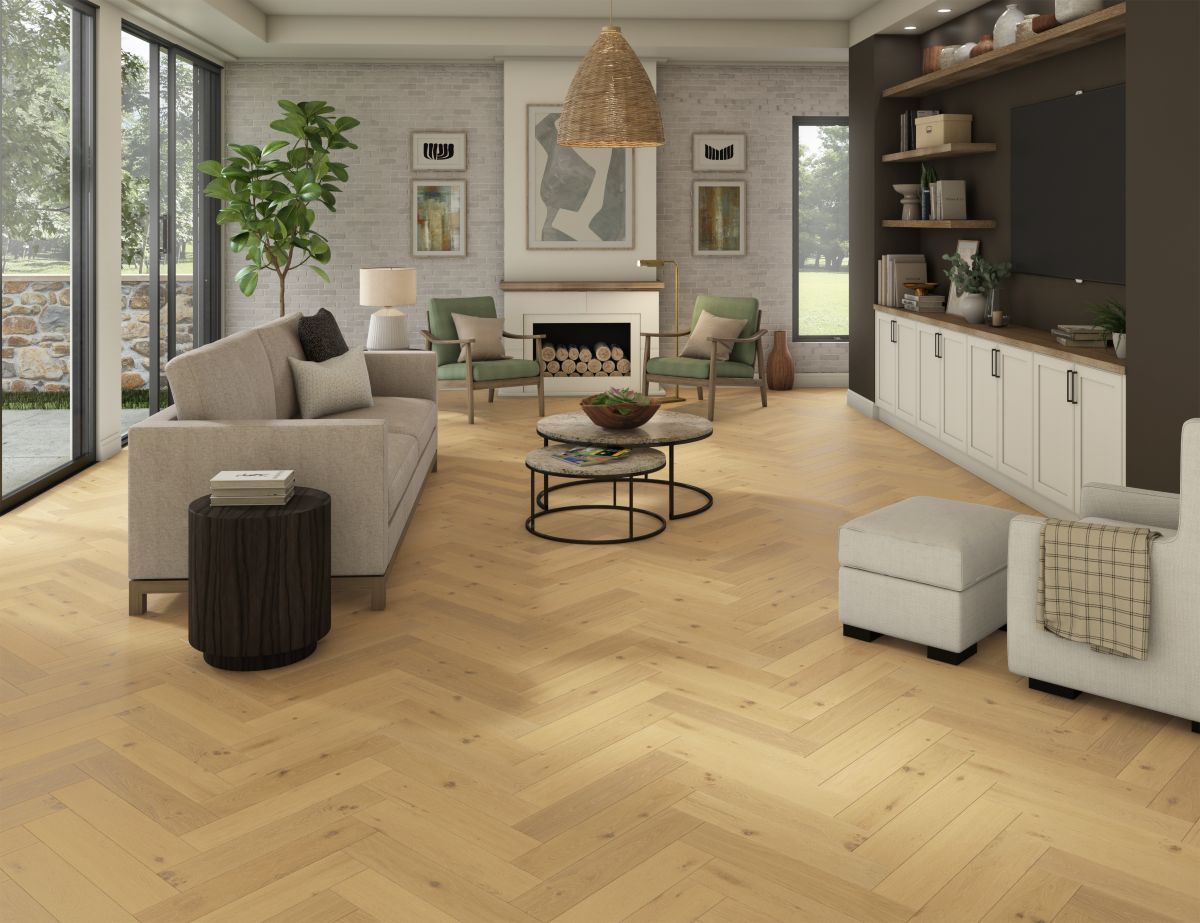
Herringbone-pattern wood floors work best in spaces where the pattern can act as a visual feature and guide movement through the room. The zigzag layout adds energy and architectural interest, making it especially effective in entryways, living areas, and open-concept spaces.
Entryways
Entryways are one of the most popular places to install herringbone flooring. The pattern immediately draws the eye forward and creates a strong first impression when someone enters the home.
For the best visual impact, installers often orient the pattern so the points direct the eye toward the interior of the house.
Living Rooms
In living rooms, herringbone hardwood flooring adds texture and character without overwhelming the space. Neutral wood tones like white oak keep the design feeling warm and balanced.
Designers often recommend aligning the pattern parallel with the longest wall in the room. This orientation can make the space feel wider and more open.
Dining Rooms
Dining rooms benefit from the refined, architectural quality of herringbone flooring. The pattern complements both traditional and modern furniture styles while adding subtle movement to the floor.
When possible, designers often direct the pattern’s points toward a focal point, such as a fireplace, window wall, or statement light fixture. This technique naturally guides the eye through the room.
Open-Concept Spaces
Herringbone flooring works particularly well in large open-concept layouts. The directional pattern helps organize the space visually and can define zones without the need for walls or transitions.
Small Rooms
Herringbone floors can also work in smaller rooms when designed carefully. Lighter wood tones and slightly smaller planks help prevent the pattern from feeling too busy.
Homes with Radiant Floor Heating
Engineered herringbone flooring is often compatible with underfloor heating systems. The layered construction of engineered wood provides greater dimensional stability than solid hardwood, making it better suited for environments with temperature changes.
What Are the Best Wood Species for Herringbone Flooring?
The best wood species for herringbone flooring include white oak, walnut, maple, ash, and hickory. White oak is the most common choice because it offers excellent stability and durability, along with a neutral grain that works well with many design styles.
Because the herringbone pattern requires precise installation, dimensionally stable woods tend to perform best over time.
White Oak
White oak is widely considered the premier species for herringbone wood flooring. It offers strong durability, a balanced grain pattern, and natural moisture resistance.
The wood also takes stains well, allowing designers to achieve a wide range of finishes from light Scandinavian tones to deeper, traditional colors. Both American and European white oak are popular choices for modern herringbone floors.
Walnut
American black walnut creates a dramatic and luxurious look with its rich, chocolate tones. Walnut works especially well in living rooms, libraries, and formal spaces where the darker color can add warmth and depth.
Because walnut is slightly softer than oak, it’s often used in lower-traffic areas.
Maple
Maple is an excellent option for homeowners seeking a lighter, contemporary aesthetic. Its smooth grain and bright color help create clean, modern interiors.
Maple is also one of the harder domestic hardwood species, making it resistant to dents and wear.
Ash
Ash offers a pale tone similar to oak but features a more pronounced grain pattern. The contrast in the grain can enhance the visual effect of the herringbone layout.
Hickory
Hickory is one of the most durable domestic hardwoods available. Its natural color variation can add character to rustic or farmhouse-style interiors, though the bold grain may create a busier appearance in intricate patterns.
How Do You Care for Herringbone Hardwood Floors?
Herringbone hardwood floors require the same basic care as traditional plank flooring. With routine maintenance, hardwood floors can last 20 to 30 years or more.
The key is to protect the finish and prevent excess moisture from reaching the wood.
Basic Care Tips
- Sweep or vacuum regularly to remove grit that can scratch the surface
- Use a damp microfiber mop with a hardwood-approved cleaner
- Wipe spills promptly to prevent moisture from seeping into joints
- Place rugs at entryways to trap dirt and debris
- Maintain stable indoor humidity to reduce wood movement
Most prefinished hardwood floors come factory-finished, which means they don’t require on-site sealing. Periodic recoating may be recommended over time to refresh the protective finish.
Engineered Wood Herringbone Pattern: The Noble’s Way
Modern engineered hardwood has made herringbone flooring more accessible than ever.
The Nobles Way® collection from Robbins® brings this historic pattern into modern homes using European White Oak engineered hardwood. The flooring features sliced-face construction and a wire-brushed texture that highlights the natural grain.
“For many years, herringbone floors were associated with custom installations in historic homes. Engineered hardwood has helped change that. Today, homeowners can achieve the same classic pattern with improved stability and long-term performance.”
— Devon McGrorty, Market Manager at AHF™.
The name Nobles Way even feels fitting for the pattern itself. For centuries, herringbone floors appeared in palaces, estates, and grand European interiors.
Today, homeowners can bring that same sense of refinement into their own spaces.
View the Nobles Way collection or visit a Robbins retailer near you to see the rich European white oak flooring in person.
A Classic Pattern That Feels Fresh Again
Design trends change quickly, but some patterns endure for centuries. Herringbone flooring is one of them.
From Roman roads to French palaces to modern homes, the pattern has remained a symbol of craftsmanship and thoughtful design.
Its distinctive zigzag layout adds movement, depth, and architectural character to any space.
With engineered hardwood products like Robbins’ Nobles Way, homeowners can enjoy the elegance of this noble pattern while benefiting from modern performance.
The result is a floor rooted in history yet perfectly suited for today’s interiors.
Frequently Asked Questions About Herringbone Pattern Wood Floors
Is herringbone flooring more expensive than traditional plank flooring?
Yes. Herringbone flooring typically costs more because installation requires additional labor and precision.
Is herringbone flooring still in style?
Yes. Herringbone flooring is widely considered a timeless design that continues to appear in modern homes.
What wood species are commonly used for herringbone flooring?
White oak is one of the most popular choices because of its durability and neutral color.
Is engineered wood good for herringbone flooring?
Yes. Engineered hardwood offers greater stability and is commonly used for herringbone installations.