
Moisture-Resistant Flooring for Water-Prone Areas
Published January 19, 2026 | By Robbins® Flooring Experts
When you’re choosing flooring for kitchens, bathrooms, or basements, one factor matters above all else: moisture resistance. That’s the entry point to avoid concerns.
These areas are magnets for water from daily splashes, appliance leaks, or humidity trapped below grade.
Water damage accounts for nearly 29% of all homeowners’ insurance claims, second only to wind and hail. The average claim? Over $11,000, according to HouseCashin. And if you have a basement, you’re especially at risk: 98% of basements experience some form of water damage over their lifetime.
“Moisture isn’t something you worry about until it’s too late. Choosing the right flooring from the start can save you thousands in repairs later.” – Travis Bjorkman, Principal Wood Scientist at AHF.
With that in mind, let’s look at the best flooring options for high-moisture spaces—and how to choose what’s right for your home.
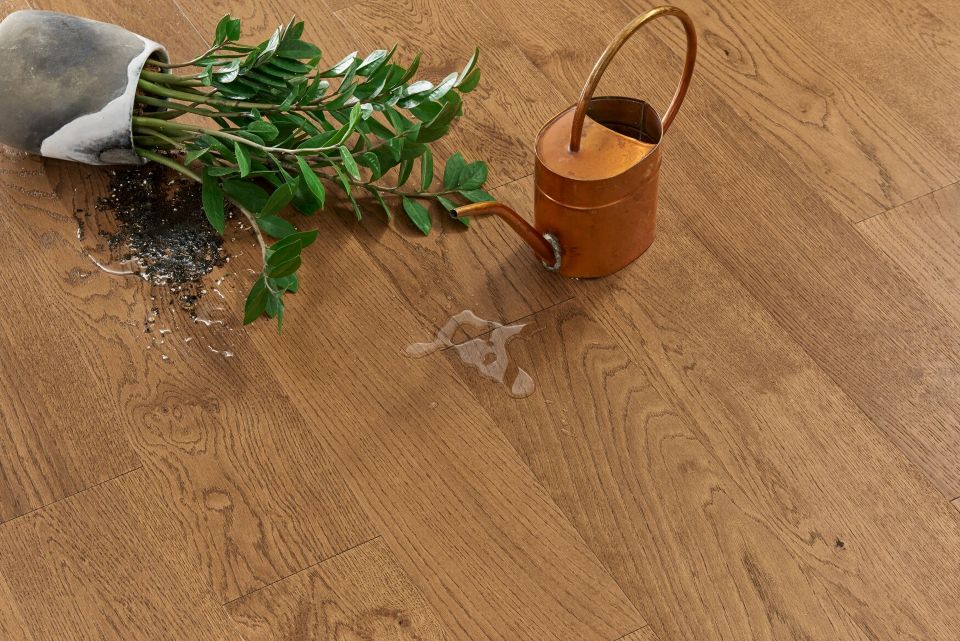
Water Resistant vs. Waterproof: Know the Difference
Both address moisture concerns, but in entirely different ways. Before you choose a flooring product, know what you’re getting.
- Water-resistant flooring can handle minor spills and daily moisture. However, standing water or high humidity can damage floors when they are overexposed.
- Waterproof flooring, on the other hand, blocks water from penetrating the surface or the core. For excessively water-prone areas, such as bathrooms with daily exposure to steam and splashes, you’ll want to opt for waterproof flooring.
In high-moisture environments, waterproof is the safer bet. However, depending on your space and budget, some high-end, water-resistant options may still be suitable.
With that critical distinction in place, let’s explore some of the more moisture-resistant flooring solutions.
Quick Comparison: Moisture-Resistant Flooring Options
| Flooring Type | Moisture Resistance | Pros | Watchouts |
| Porcelain/Ceramic Tile | Excellent (waterproof) | Durable, classic, low maintenance | Cold, grout upkeep, pro install recommended |
| Luxury Vinyl | Excellent (waterproof) | Stylish, DIY-friendly, affordable | May dent, not real wood |
| Hybrid Resilient | High | Scratch/stain resistant, stable | Mid-range price |
| Laminate | Moderate to High | Wood-look, budget-friendly | Limited waterproof time window |
| Engineered Tile | High | Durable, natural look | Less DIY-friendly |
| Engineered Wood | Low to Moderate | Real wood, improved resistance | More expensive, care is still required |
Porcelain & Ceramic Tile – A Proven Classic for Moisture Resistance
Tile has long been the go-to for moisture-prone areas—and for good reason.
Made from non-porous materials and fired at high heat, porcelain stone tile is naturally waterproof. The flooring is also incredibly durable and low-maintenance.
Porcelain stone tile is ideal for bathrooms and kitchens, as it can withstand steam, splashes, and even small leaks without issue.
“Tile is your waterproof shield. With proper grout sealing, it’ll outperform almost anything in wet zones.” – Travis Bjorkman, Principal Wood Scientist at AHF.
One of its few downsides is that it can be cold underfoot. It may also crack if installed incorrectly, and it requires occasional sealing.
Best suited for: bathrooms, kitchens, laundry rooms, and entryways.
Luxury Vinyl Plank (LVP) or Tile (LVT) – Stylish & 100% Waterproof Flooring
Luxury vinyl is becoming the go-to flooring in new homes because it delivers on both style and substance (Times Union). And with good reason. LVP and LVT products are 100% waterproof, mimic the look of hardwood or stone, and offer superior comfort underfoot.
They’re also scratch-resistant, easy to clean, and can be installed over existing floors, making them ideal for remodels.
Best for: Kitchens, bathrooms, basements, and homes with kids or pets.
Hybrid Resilient Flooring – Next-Gen Durability
For a floor that combines the best of vinyl and laminate, hybrid resilient flooring is the answer. Built with a rigid core and waterproof wear layer, it resists moisture, scratches, and temperature fluctuations.
“Hybrid floors bring advanced stability to rooms where you need waterproofing and toughness.” – Travis Bjorkman, Principal Wood Scientist at AHF.
Hybrid resilient flooring offers realistic wood-look visuals and provides a comfortable underfoot experience. When you’re looking for moisture protection, durability, and style, this option is tough to beat.
Robbins® Ingenious Plank® hybrid resilient flooring is 100% PVC-free and highly sustainable.
Best suited for: basements, kitchens, and high-traffic living areas.

Waterproof Laminate Flooring – Traditional Look, New Tech
Classic laminate had a reputation for swelling and peeling when exposed to water. But today, companies like Robbins now offer waterproof laminate flooring with its Valley Terrain™ and Pacific Path™ offerings.
The flooring includes sealed edges, hydrophobic coatings, and moisture-resistant cores. As a result, it can withstand water for up to 72 hours.
“Waterproof laminate gives you a hardwood feel with far better durability in wet zones. It’s also budget-friendly and often DIY-installable.” – Travis Bjorkman, Principal Wood Scientist at AHF.
Best for: Kitchens, bathrooms (with proper sealing), finished basements.
Engineered Tile – Style Meets Function with Built-in Moisture Protection
Engineered tile offers the natural beauty of stone with the waterproof strength of tile, providing a unique blend of aesthetics and durability. And it requires no sealing like natural stone.
The flooring generally uses composite materials with a protective wear layer. Tiles are water-, scratch-, and stain-repellent and, unlike natural stone, crack-resistant. Best of all, it installs quickly and is DIY-friendly, unlike natural stone flooring.
“Engineered tile is great for people who want the look of high-end materials without the cost or maintenance. It also handles moisture-prone areas nicely.” – Travis Bjorkman, Principal Wood Scientist at AHF.
Best for: Bathrooms, kitchens, foyers, laundry rooms.
Engineered Hardwood – Real Wood, Real Protection
You might be surprised to see engineered hardwood on this list. After all, homeowners typically avoid hardwoods in areas prone to moisture, such as basements. However, new engineered hardwood with waterproof cores is flipping that script.
“If you’re a wood purist, this is your best shot at getting the real thing into moisture-prone areas.” – Travis Bjorkman, Principal Wood Scientist at AHF.
For example, Robbins offers two moisture-resistant wood flooring solutions. Hydroguard® waterproof engineered hardwood is a real wood solution sealed against top-down moisture damage. It delivers the elegance of hardwood with added protection for everyday splashes and humidity.
Additionally, its new Timber Legends™ densified wood flooring rivals hybrid resilient flooring but features genuine hardwood. The flooring is water-resistant. It also provides six times the dent resistance and four times the scratch resistance of standard wood flooring.
Both moisture-resistant flooring options come with a limited lifetime residential warranty.
Best suited for: Kitchens, basements, and open-plan homes where design continuity is essential.
Robbins® Keeps You From Getting Underwater
Moisture-resistant flooring isn’t just smart—it’s essential. Whether you’re renovating or building new, choose flooring that can handle whatever your home throws at it.
From waterproof laminate to hybrid resilient and engineered tile, today’s flooring options combine beauty, resilience, and waterproof performance.
Robbins offers a broad portfolio of moisture-resistant flooring designed for life’s messiest moments. Most come with a limited lifetime residential warranty.
Stay dry in style. Find a Robbins retailer near you.
Bonus: 4 Ways to Protect Your Floors from Water Damage
Choosing moisture-resistant flooring, such as the options above, is a crucial first step—but a little prevention goes a long way.
“Even waterproof floors benefit from maintenance. These habits can keep you a step ahead of costly repairs.” – Travis Bjorkman, Principal Wood Scientist at AHF.
Here are a few low-effort ways to extend the life of your floors:
- Use Floor Mats in Key Areas
Place water-trapping mats near sinks, tubs, and exterior doors to prevent water from entering your home. They catch drips before they hit your floors. - Seal Around Fixtures and Appliances
Apply waterproof caulk around toilets, bathtubs, and under-sink cabinets to block sneaky leaks. - Maintain Appliances
Dishwashers, washing machines, and water heaters are leading causes of home water damage. Check hoses and valves annually. - Use a Dehumidifier in Basements
Basements are naturally humid. A dehumidifier can reduce moisture buildup and protect your subfloor from long-term damage.