
Porcelain Tile – The Everyday, Everywhere Solution
Originally Published May 7, 2025, Updated April 10, 2026 | By Robbins® Flooring Experts
Wouldn’t having a surfacing solution that can do it all be awesome? It would withstand daily wear, offer incredible design flexibility, and capture the look of other materials but with better performance.
Well, that solution exists—porcelain tile. More homeowners are choosing porcelain tile for their homes, inside and out.
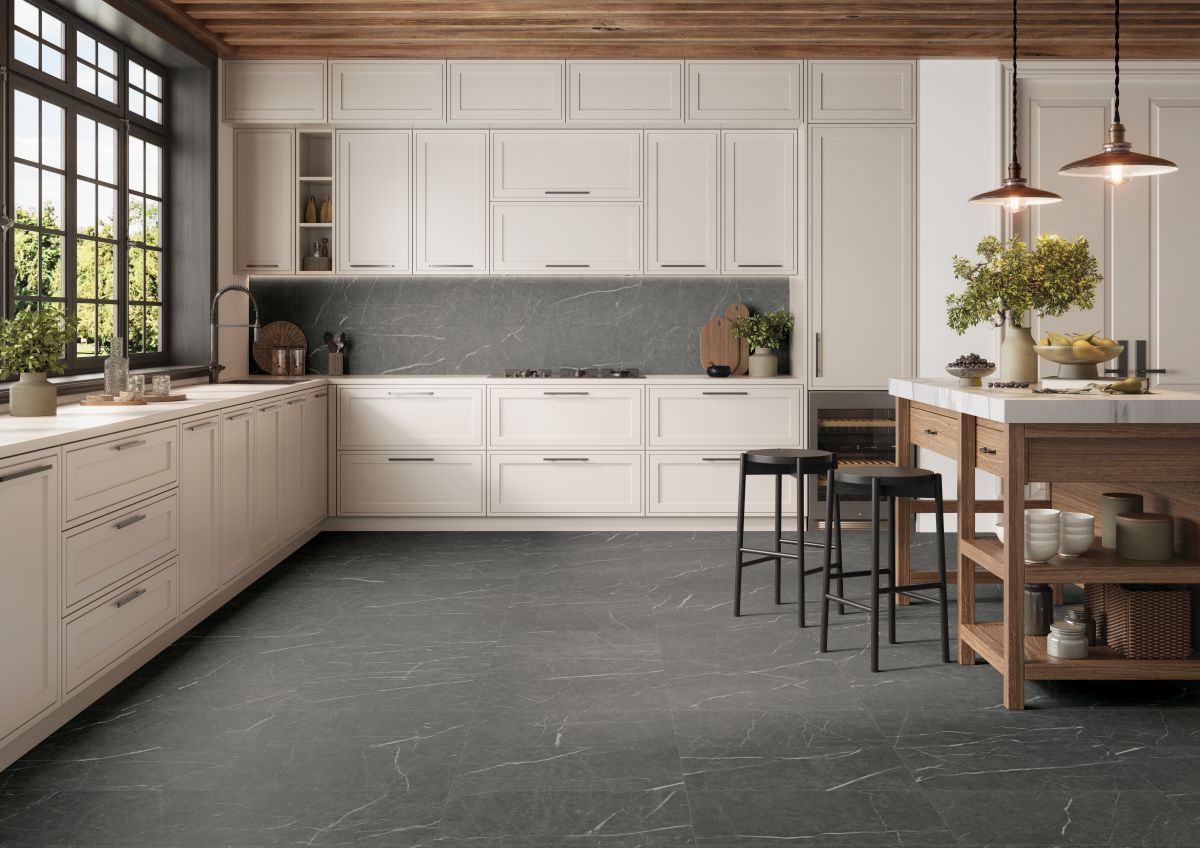
Porcelain tile is dense and non-porous, making it highly resistant to stains, water, scratches, and heavy foot traffic. It adds a perfect touch to kitchens.
The global ceramic tile market is projected to reach USD 583.6 billion by 2033, growing at a CAGR of 6.8% from 2023 to 2033. In 2024, porcelain captured more than 59.6% of the ceramic wall tile market, underscoring its dominance as homeowners and designers increasingly prioritize performance, style, and longevity.
“Porcelain’s evolution over the past decade has been remarkable. Designers once chose porcelain solely for its durability. Now, they choose it for its design sophistication and its ability to go anywhere, indoors or out.”
Devon McGrorty, Marketing Manager, AHF.
With advanced technology, versatile design, and unmatched performance, porcelain has become one of today’s most specified surfacing materials for residential and commercial projects alike.
Key Takeaways
- Porcelain tile combines the beauty of natural materials with unmatched strength and water resistance.
- Its versatility makes it ideal for both indoor and outdoor applications.
- With low maintenance and lasting performance, porcelain is one of the most durable and sustainable surfaces available.
- Modern digital printing creates design options that mimic wood, stone, and concrete with stunning realism.
- Robbins® porcelain collections are made in the USA and built for a lifetime of style and performance.
Why Homeowners Choose Porcelain Tile
Porcelain tile combines durability, versatility, and elegance, making it ideal for kitchens, baths, and outdoor patios.
That makes its applications endless: walls, outdoor spaces, showers, countertops, backsplashes, and beyond. Yes, porcelain tile is also excellent for flooring.
Few materials transition as seamlessly between indoor and outdoor spaces as porcelain tile. Its refined finishes complement spa-like bathrooms and modern kitchens indoors, while its dense, moisture-resistant body performs beautifully outdoors on patios, pool decks, and walkways.
What is Porcelain Tile?
Porcelain is a type of ceramic tile, but it’s denser, less porous, and far more durable. It’s made from refined clay and fired at high temperatures, making it harder and more moisture-resistant than standard ceramic. This also means it performs just as well in high-traffic areas as wet zones like bathrooms and kitchens.
“The mineral composition and firing process give porcelain a denser microstructure and lower porosity than standard ceramic. That’s why it performs beautifully in both high-traffic and high-moisture areas without the degradation you might see in other materials.”
Olga Rivas, Senior Research Scientist, AHF
Beyond how it’s made, porcelain tile also varies by finish and construction. Understanding these differences helps you choose the right tile for your space.
Types of Porcelain Tile
Porcelain tiles can be categorized by finish (glazed, unglazed, polished, matte, textured) or body type (full-body/homogeneous, double-charged, digitally printed).Different finishes offer unique aesthetics and surface properties, while body types influence color and pattern throughout the tile.
Types by Finish
- Glazed: Features a protective, non-porous surface coating that can be glossy or matte, available in a wide range of colors and patterns.
- Unglazed: Lacks a sealed surface layer, offering a more natural, earthy appearance with subtle color variations.
- Polished: Achieves a mirror-like shine through grinding after firing, ideal for contemporary or upscale settings.
- Matte: Smooth but non-reflective, creating a softer, natural look perfect for understated designs.
- Textured: Rougher or uneven surfaces emulate natural stone and can improve slip resistance in wet areas.
Types by Body
- Full-Body (Homogeneous): Color and pattern run through the entire tile, making chips and wear less visible. Ideal for heavy-use areas.
- Double-Charged: A second pigment layer is fused to the surface, creating deeper, more durable patterns for commercial or high-traffic spaces.
- Digitally Printed: High-definition imaging allows for highly detailed designs that mimic wood, stone, or concrete with remarkable realism.
- Speckled-Body: Often full-body tiles featuring a base color with small contrasting specks, adding visual depth and interest.
Design Without Limits
Porcelain tile’s beauty lies in its versatility. Advanced digital printing can replicate the texture and character of wood, marble, limestone, or concrete with striking realism. From warm oak tones to cool gray stone looks, porcelain tile gives homeowners endless creative freedom.
Large-format tiles can visually expand spaces, while smaller mosaics add intricate texture and contrast. Robbins, for example, offers these formats:
- 12″ × 24″
- 24″ × 24″
- 24″ × 48″
- 8″ × 48″
Choose matte finishes for a natural feel or polished styles for a modern, high-end look.
Is Porcelain Tile Waterproof?
Yes, porcelain tile is virtually waterproof. Its dense structure and low absorption rate make it one of the best materials for wet and moisture-prone areas.
Porcelain tile absorbs less than 0.5% of its weight in water, qualifying it as impervious under the American Society for Testing and Materials (ASTM C373) standard.
In comparison, ceramic tile absorbs between 3% and 7% of its weight in water, making it far more vulnerable to water damage.
That means porcelain tile is safe for showers, pool sides, laundry rooms, outdoor patios, and anywhere else moisture is a factor.
This level of water resistance not only prevents damage but also helps avoid mold, mildew, and long-term staining caused by trapped moisture.
“We’ve tested porcelain’s resistance under extreme temperature and humidity cycles. It consistently resists moisture penetration, improving durability and supporting a healthier indoor environment by preventing mold growth beneath the surface.”
Olga Rivas, Senior Research Scientist, AHF
Porcelain vs. Ceramic Tile – How They Compare
Homeowners often group porcelain and ceramic tile together, and for good reason. After all, they’re both made from clay and hardened in a kiln. However, in terms of performance and versatility, porcelain tile stands out among ceramics.
Porcelain tile may have a higher upfront cost or require more specialized installation. Still, because it lasts for decades, its lifetime value can be significantly higher than that of ceramic tile.
Learn five factors that can help you decide between porcelain and ceramic tile.
Here’s how they stack up:
| Feature | Porcelain Tile | Ceramic Tile |
| Density & Composition | Made from refined clay fired at higher temperatures for a denser, less porous body | Made from natural clay fired at lower temperatures, resulting in a more porous surface |
| Water Absorption | Absorbs less than 0.5% water (impervious under ASTM C373) | Absorbs 3–7% water, making it more prone to moisture damage |
| Durability | Extremely hard, chip- and scratch-resistant; ideal for high-traffic areas | Softer and more likely to chip or crack under heavy use |
| Design Variety | Advanced digital printing creates realistic wood, stone, and marble looks, available in large-format sizes. | Wide color and pattern options, but less realistic surface textures |
| Indoor/Outdoor Use | Suitable for indoor and outdoor installations | Typically for indoor use only due to higher porosity |
| Maintenance | Low-maintenance; never requires sealing | May require occasional sealing to prevent stains |
| Installation | Slightly heavier and harder to cut; best installed by professionals | Easier to cut; suitable for DIY projects |
| Cost | Generally, a higher upfront cost but a longer lifespan | Lower upfront cost but shorter lifespan |
| Best Applications | Floors, walls, showers, outdoor patios, and commercial spaces | Walls, low-traffic indoor floors, backsplashes |
One trade-off: because porcelain is hard and dense, it may feel colder underfoot. Additionally, if very glossy, it can be more slippery in wet areas. Choose textured or matte finishes and appropriate outdoor ratings to mitigate this.
Bottom line: Ceramic is a good choice for light-duty indoor projects. But for long-term durability, water resistance, and a broader range of applications, porcelain tile is the smarter investment.
Porcelain Tile Is Durable and Long-Lasting
One of the most significant advantages of porcelain tile is its durability. Unlike other surfaces that require refinishing, sealing, or replacement every few years, porcelain continues to perform beautifully. You can count on it to look good for decades.
Here’s why it’s so dependable:
- Resists wear in high-traffic areas without fading or surface damage
- Won’t warp, swell, or degrade when exposed to moisture
- Color and pattern go through the tile (for through-body porcelain), so chips are less noticeable
- Holds up to everyday life: pets, kids, spills, furniture, and even seasonal weather when used outdoors
Porcelain is a long-term solution indoors and out for homeowners who don’t want to redo their surfaces every 5–10 years. With proper care, porcelain tile can last 50 years or more. And keeping it that way is easier than you might think.
Learn more about why porcelain tile is perfect for active households.
Porcelain Tile Is Easy to Maintain
Porcelain tile is as low-maintenance as it gets. Unlike natural stone, it never needs sealing, polishing, or refinishing. Regular sweeping and a damp mop keep it looking beautiful for years.
Its dense surface resists stains from coffee, wine, and other household spills. For deeper cleaning, a mild, pH-neutral cleaner is all that’s needed; no harsh chemicals are required.
While porcelain itself is virtually waterproof, grout joints benefit from sealing to prevent staining and mildew. Proper sealing and ongoing care are essential to preserve appearance and performance.
For everyday upkeep, sweeping once a week and mopping with warm water keeps tiles looking new.
Porcelain Tile is Sustainable
Beyond its lifespan, porcelain tile offers a sustainable advantage. Its long wear cycle reduces replacement frequency, minimizing landfill waste. Many porcelain products are also made in the USA, helping reduce transportation-related emissions.
At Robbins, for example, more than 80 porcelain options span seven collections. The majority are manufactured domestically in facilities that prioritize responsible material sourcing and waste reduction.
Porcelain Uses Natural Materials
Porcelain tile’s composition makes it inherently eco-friendly. It’s primarily made from natural materials such as clay, feldspar, and sand. It’s free from plastics, volatile organic compounds (VOCs), and formaldehyde.
That means it contributes to cleaner indoor air quality and can help projects meet FloorScore® or LEED® certification standards.
Its reflective surfaces can even support energy efficiency, helping interiors stay cooler and reducing energy use.
Because porcelain doesn’t require refinishing, sealing, or harsh chemical cleaners, its long-term maintenance has a lower environmental impact than that of many other flooring types.
Why Porcelain Is a Smart, Sustainable Choice
That combination of natural composition and long-term durability makes porcelain one of the most sustainable surfaces available. It’s proof that longevity and sustainability truly go hand in hand.
“Longevity and sustainability go hand in hand. When you choose a product that doesn’t need to be replaced every decade, you make a good design choice for both your home and the planet.”
Devon McGrorty, Marketing Manager, AHF.
Where to Use Porcelain Tile
Porcelain shines in both residential and commercial settings across a wide range of surfaces:
- Floors and Walls: Use the same tile across surfaces to create visual continuity.
- Backsplashes: Porcelain backsplash tile resists stains and heat, perfect for kitchens.
- Showers and Bathrooms: Water resistance plus style.
- Fireplace Surrounds: Heat-resistant and dramatic with the right tile designs.
- Outdoor Spaces: Patios, walkways, or vertical wall coverings with outdoor porcelain tile built to handle the elements.
“Wood-grain porcelains have become some of our most requested styles. They offer the warmth of natural wood combined with the moisture resistance and durability of tile. It’s a game-changer for families and open-concept spaces.”
Devon McGrorty, Marketing Manager, AHF.
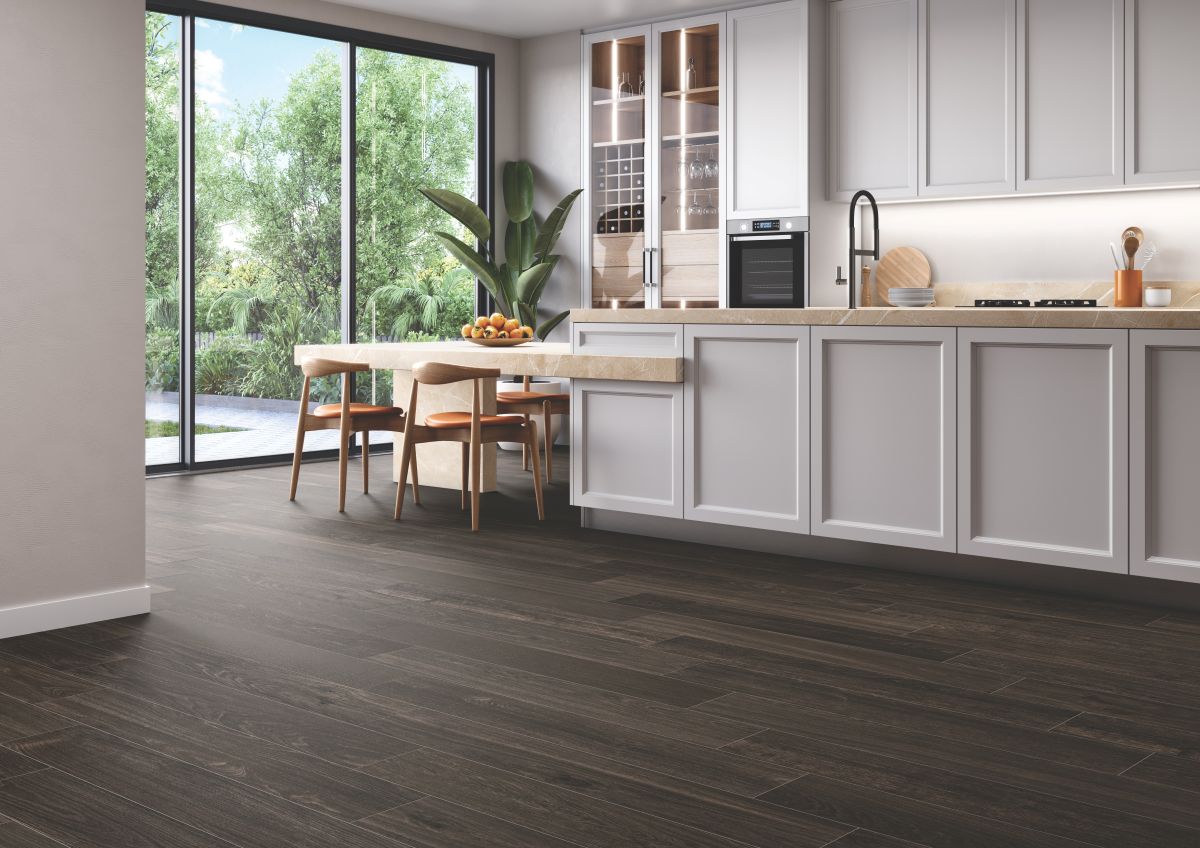
Wood grain porcelain tile offers the aesthetic warmth of hardwood with superior durability, making it ideal for high-traffic, moisture-prone areas like kitchens.
What to Look for When Buying Porcelain Tile
Knowing what features to look for will help you select high-quality porcelain flooring. Here are a few key things to consider when shopping for porcelain tile.
Find the Right Class of Tile
The class rating measures how well a tile resists wear. Class 5 is the toughest and most durable, making it ideal for high-traffic areas such as kitchens, entryways, and commercial spaces. Class 1 tiles, by contrast, should not be used for flooring, as they can wear or chip under heavy use.
Find the Right Grade of Porcelain
Grade refers to the overall quality and thickness of the tile. Grade 1 porcelain is the thickest and highest quality, often up to three-quarters of an inch thick. That makes it a strong choice for floors. Grade 3 tiles, which are thinner (around a quarter inch), are best for walls or light-duty areas.
Find Your Color and Style
Porcelain tile goes far beyond classic white. Thanks to digital printing and modern glazing, today’s options include realistic wood, marble, concrete, and stone looks, as well as bold colors and patterns. Choose finishes and formats that complement your home’s design style and intended use.
Don’t Forget Installation
Because porcelain tile is denser and heavier than standard ceramic tile, it may require stronger subflooring, heavier lifting, and specialist cutting tools. For best results, professional installation is often recommended.
By understanding class, grade, and style, you’ll ensure your investment performs as beautifully as it looks.
Porcelain Tile – An Everyday, Everywhere Solution
Porcelain tile stands out as the wise, long-term choice for surfaces that truly deliver. It is waterproof, low-maintenance, and rugged enough for busy households. It works in every room—floors, walls, backsplashes, bathrooms, patios, and more.
Robbins® now offers stylish porcelain tile collections featuring stone, marble, and wood looks. Many are made in the USA. They elevate everyday practicality with design-driven styles, modern formats, and surfaces built to last. You can choose from smaller and larger formats to fit your precise needs.
The combination of performance, technology, and design versatility makes porcelain tile an investment that continues to pay off. As consumer demand for high-quality, low-maintenance materials grows, porcelain is poised to remain the dominant category leader through 2033.
From porcelain tile entryways to kitchen backsplashes and indoor-outdoor patios, Robbins offers the selection and sizing to create your perfect space.
Porcelain tile. Everyday. Everywhere.
Porcelain Tile FAQs
Is porcelain tile better than ceramic?
Yes. Porcelain tile is denser, more durable, and more water-resistant than ceramic, making it ideal for high-traffic or moisture-prone spaces.
What are the disadvantages of porcelain tiles?
Porcelain is harder to cut, so professional installation is often recommended. It’s also slightly heavier than ceramic.
Can mold grow under porcelain tile?
Porcelain’s low absorption rate makes mold growth unlikely when installed correctly with proper sealing and underlayment.
What should you avoid with porcelain tiles?
Avoid harsh acidic cleaners or metal tools that can dull or scratch the surface glaze.
Is porcelain tile slippery when wet?
Porcelain tile is available in matte and textured finishes that provide traction, making it safe for wet areas like bathrooms and patios.